
Parga is usually pictured for its beaches and its Venetian castle, but step back from the harbour and you find yourself at the meeting point of two very different wild worlds. To the west, the Ionian Sea holds dolphins, seagrass meadows and wintering seabirds. To the east, wooded hills, olive terraces and the valley of the River Acheron shelter raptors, wetland birds and a slower, greener kind of landscape. Neither requires much effort to reach, and both reward a bit of patience and a pair of binoculars more than a rushed itinerary.
Dolphins and marine life offshore
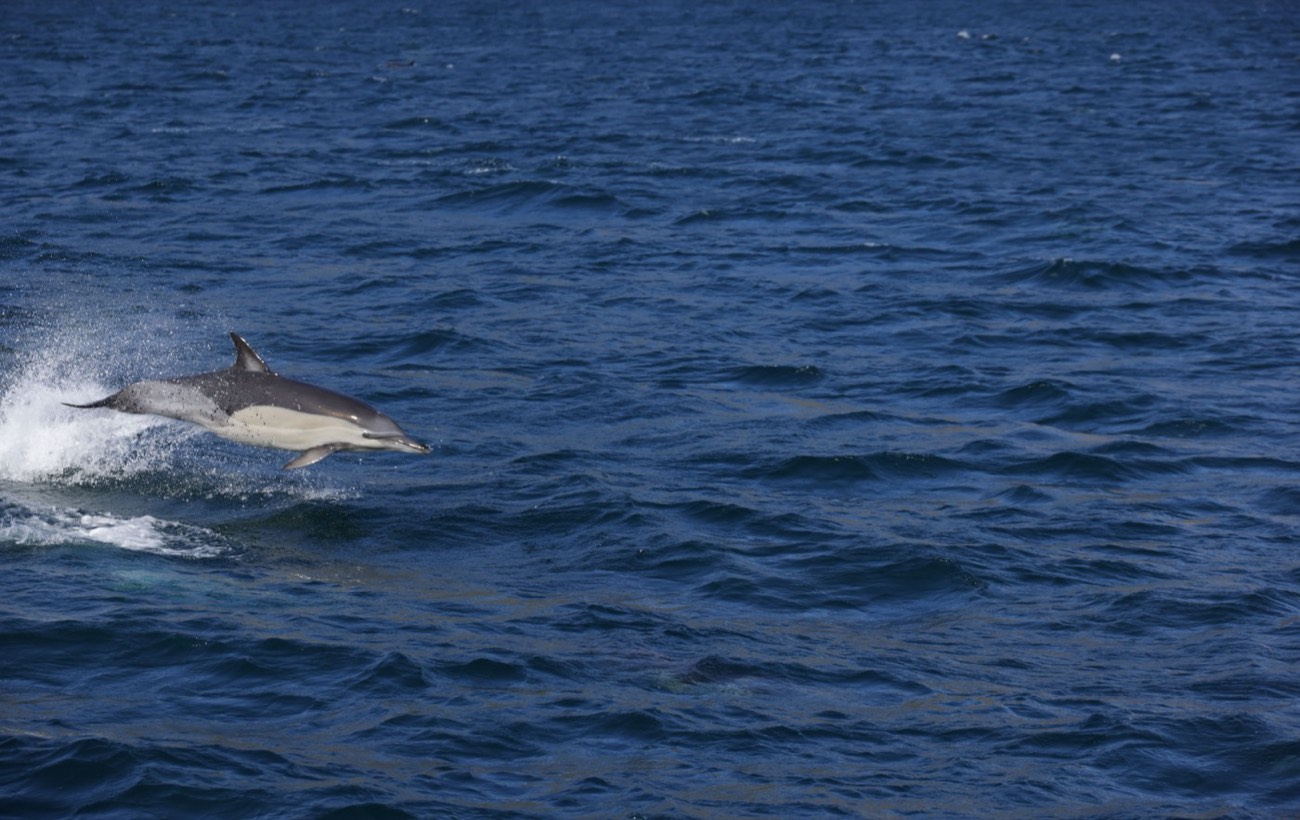
The stretch of Ionian Sea between Parga and the islands of Paxos and Antipaxos is genuinely good dolphin territory. Bottlenose and common dolphins are the species most regularly recorded here, with striped dolphins occasionally seen further offshore, and day-trip boats heading out to the islands often report sightings, particularly on calmer mornings when pods follow a boat's wake or feed near the surface. Nothing is ever guaranteed with wild animals, but it is common enough that many visitors do see dolphins without any special effort, simply by taking one of the regular boat excursions along this coast.
Mediterranean monk seals, among the rarest seals in the world, still frequent isolated coves and sea caves further along the Ionian coastline, including around Paxos, though sightings are occasional rather than routine. Loggerhead turtles, which nest and forage in various parts of Greek waters, are also sometimes spotted moving through open water here. None of these animals should be approached or fed; keeping a respectful distance, from a boat or in the water, gives them the space they need and is also the best way to see natural behaviour rather than a startled retreat.
The Posidonia meadows beneath the surface
Much of what makes this coast so clear and so full of fish is invisible from the shore: extensive underwater meadows of Posidonia oceanica, a flowering seagrass endemic to the Mediterranean. These meadows act as a nursery and refuge for a large share of the region's fish and other marine life, oxygenate the water, stabilise the seabed and store a meaningful amount of carbon, functioning rather like an underwater forest.
Snorkellers around the bays near Parga will often swim straight over a Posidonia bed without realising its importance, mistaking the long ribbon-like leaves for an ordinary weed bank. It is worth pausing over one, since these are slow-growing, long-lived systems that take many decades to recover once damaged. Anchoring directly on a meadow, or standing on it, causes lasting harm, which is why boat operators are increasingly asked to anchor on sand instead.
Wetland birds at the mouth of the Acheron
A short drive south of Parga, at the village of Ammoudia, the River Acheron reaches the sea through a belt of reed beds, lagoons and wet meadows. This wetland, protected under the European Natura 2000 network, is a genuinely good spot for birdwatching, especially outside the height of summer. Herons and egrets are easy to find along the water's edge, and the more patient visitor may pick out Eurasian spoonbills, black storks or ferruginous ducks among the reeds, particularly during spring and autumn migration.
The river itself, associated since antiquity with the mythical passage to the underworld, is placid and shallow here, lined with plane trees, willows and poplars, and makes for an easy, unhurried walk or paddle rather than a dramatic gorge.
The Acheron gorge and its raptors inland
Further upstream, around the village of Glyki, roughly thirty to forty minutes' drive from Parga, the character of the river changes completely. Cold springs emerge from limestone cliffs into narrow straits, and the surrounding gorge country supports a notable population of birds of prey, including golden eagles, griffon vultures, Bonelli's eagles and Egyptian vultures nesting on the cliffs. This is also the starting point for the region's rafting, kayaking and river-trekking activities, generally run from spring through autumn, and even a short walk along the riverbank gives a real chance of seeing a raptor circling above the crags.
Olive terraces and wooded hills around Parga
Closer to town, the landscape softens into centuries-old olive groves climbing the hillsides, interspersed with cypress, pine and patches of Mediterranean maquis scrub. These terraces are worth exploring on foot: the paths that link Parga to its outlying beaches and villages pass beneath old olive trees where bee-eaters, hoopoes and various warblers are commonly heard if not always seen, and it is not unusual to come across a tortoise moving unhurried across a dirt track in spring. Buzzards and kestrels hunt over the open ground, and cicadas provide the soundtrack from late spring onward.
Good to know
- Dolphin and wildlife sightings on boat trips are common but never certain; treat any sighting as a bonus rather than an expectation.
- When swimming or snorkelling, avoid standing on or anchoring over seagrass meadows, which are slow to recover from damage.
- Ammoudia, at the Acheron's mouth, is a short drive south of Parga and suits an easy birdwatching walk.
- Glyki, for the Acheron springs and gorge, is roughly thirty to forty minutes inland from Parga.
- Early morning and late afternoon generally offer the best light and the most bird activity, both on the coast and inland.
- Bring binoculars if birdwatching is of interest; much of the best activity happens at a distance, over water or high on cliff faces.