
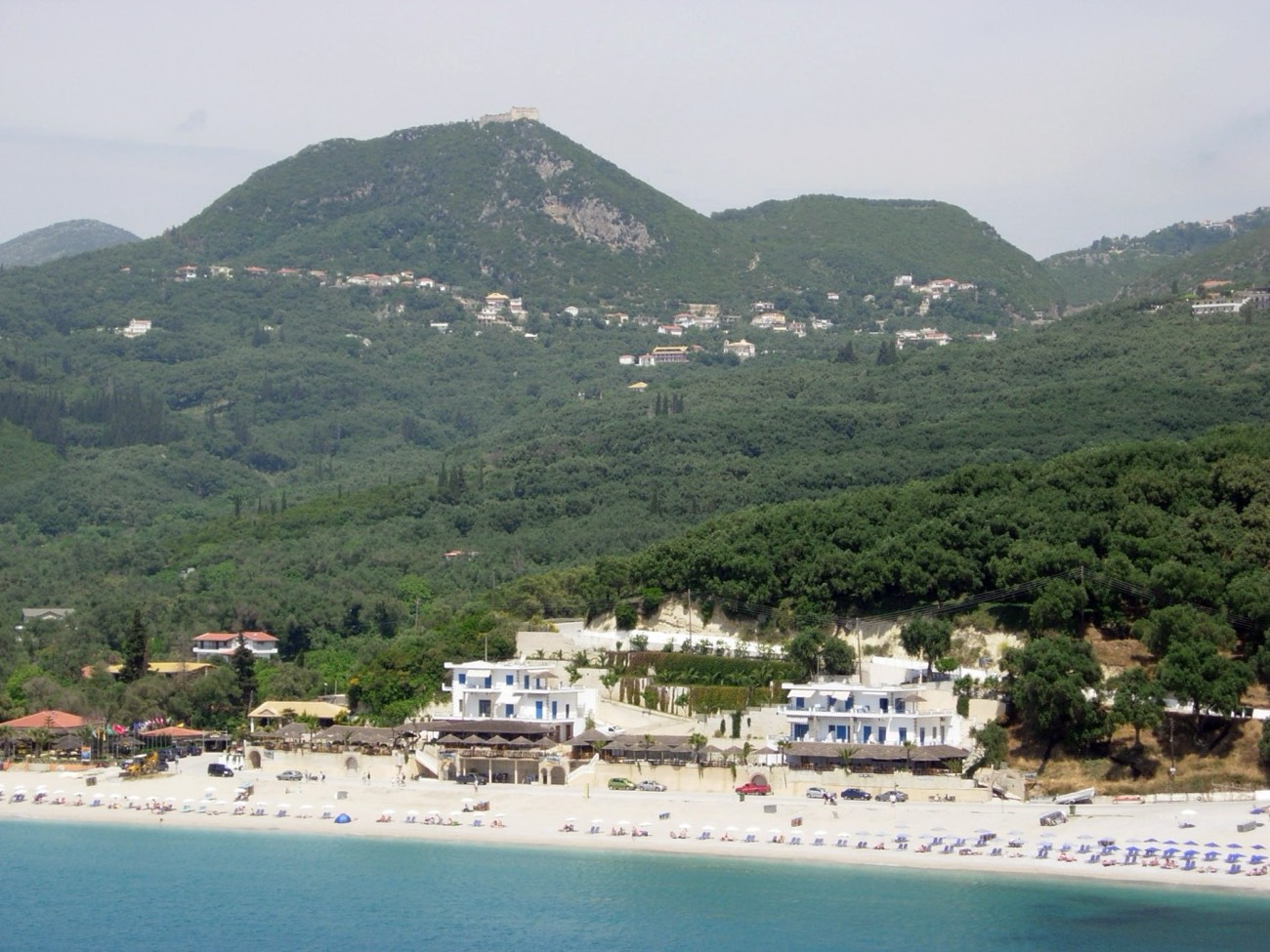
There are beaches you visit, and beaches you sink into for the day. Valtos belongs firmly to the second sort. Curving along a broad bay beneath Parga's Venetian castle, it is the town's largest and best-loved stretch of sand, and one of the longest on this part of the Ionian coast. On a still summer morning, with the light low and the water glass-clear, the whole bay takes on a golden sheen. Close enough to walk to, far enough to feel like an escape, it is the beach most visitors picture when they think of Parga.
The setting: sand beneath the castle
Valtos sits in a broad, sheltered bay on the far side of the headland from Parga's harbour. Look back towards the town and the Venetian fortress crowns the ridge above you, its walls first raised centuries ago and strengthened over generations to guard the coast. The result is one of those views that flatters every photograph, from morning to dusk.
The shore itself is a long, gentle sweep of pale sand mixed with soft pebbles. The texture varies as you walk: finer, softer sand towards one end, more shingle where the beach is left wild and unorganised. The water is famously clear, shading from turquoise in the shallows to deeper blue further out. Much of the beach is well organised, with sunbeds and umbrellas for hire, showers, and a scattering of beach bars and tavernas set just back from the sand.
Getting there: over the headland or by water taxi
Half the pleasure of Valtos is the arrival. From the old town, a footpath climbs past the castle and winds around the headland before dropping down to the bay. It takes somewhere between fifteen and twenty-five minutes depending on your pace, and it is genuinely lovely, with sea views opening up at every turn. Do be warned that the path is steep in places and roughly paved, so sensible shoes beat flip-flops.
If the climb doesn't appeal, there are two easier options. Small water taxis run across from Parga's harbour through the season, delivering you to the beach in a matter of minutes for a few euros. Alternatively, a longer road loops behind the town and reaches Valtos by car, with parking alongside part of the beach; from there, no steps are needed to reach the sand.
- On foot: roughly 15–25 minutes over the headland from the old town; scenic but steep in parts.
- By water taxi: a short hop from Parga harbour, running regularly through the summer season.
- By car: the road route behind town brings you to level, step-free access with parking nearby.
Swimming and family days
This is a reassuring beach for swimmers of every age. The entry is gentle and the water shallow for a good way out, which makes it a natural choice for families with small children. The organised sections mean shade, cold drinks and facilities are never far away, and the bay is sheltered enough that the sea is often calm, particularly first thing, before the day's breeze and the watersports get going.
Because it is so long, Valtos rarely feels unbearably crowded, even in August. If you want more space, simply walk further along: the organised bars thin out and the beach grows quieter and wilder the further you go from the town end.
Watersports and daytime buzz
Valtos is the liveliest beach in the area for anyone who likes to be active on the water. Several operators spread along the sand offer a full spread of activities through the season, from parasailing high over the bay to jet skis, kayaks and stand-up paddleboards. Gentler options abound too: pedalos, canoes, banana rides and inflatables keep children happily occupied, and a paddleboard is a fine, calm way to explore the coastline.
The far end and the ruins
It is well worth wandering to the far end of the bay, where a small harbour is softened by oleander and cypress and a little chapel waits to be found. On the hillside above lie the atmospheric ruins of the Byzantine monastery of Panagia Vlacherna, its tall old bell tower still standing: a quiet, shaded counterpoint to the busy sands, and a good excuse for a stroll once the midday heat eases.
Atmosphere and the best time to go
By day Valtos hums with an easy, family-holiday energy: children in the shallows, the drone of a parasail boat, the clink of glasses at the beach bars. Come evening it softens completely. The watersports pack up, the crowds drift back over the hill, and the tavernas on the Valtos side of the headland come into their own, several of them positioned for a grandstand view of the sunset over the bay.
For swimming and photographs, early morning is hard to beat, when the water is stillest and the light kindest. Late afternoon and dusk are the other magic hour, as the castle catches the last of the sun. The beach is at its best from late spring through to early autumn: midsummer is warmest and busiest, while June and September offer warm seas with a little more room to breathe.
- Best light: early morning for calm water; late afternoon and sunset for warm colour.
- Quietest spots: walk towards the far end, away from the town side, for space.
- Bring: water shoes if you dislike pebbles underfoot, plus sun cover, as natural shade is limited.
- Season: late May to early October; June and September are the sweet spot for warmth without the peak crowds.