
Inland from Parga's beaches, where the coastal olive groves give way to grey limestone crags, lies a landscape steeped in one of Epirus's most sorrowful stories: the country of Souli, home to fiercely independent mountain communities who held out against Ottoman rule for generations, and the setting for the Dance of Zalongo, an act of mass self-sacrifice in December 1803 that has become one of the defining images of Greek resistance. It is not an easy story, but it is an essential one for this corner of Greece.
The Souliotes: free people of a free mountain
The Souliotes were an Orthodox Christian community, predominantly of Albanian-speaking origin but closely bound to the Greek-speaking world around them, who settled the rugged Souli massif south-east of Parga from at least the early seventeenth century. Organised into a loose confederation of clans, they answered to no Ottoman governor and paid tribute to no one they had not chosen to fight. Their terrain did the work: narrow gorges, sheer cliffs and a handful of defensible approaches made Souli extremely difficult to take by force, and generations of Ottoman commanders learned that lesson the hard way. By the later eighteenth century, Souli was a formidable armed society of several thousand people, its warriors, men and women both, earning a reputation across the Balkans for guerrilla warfare.
Defying the Lion of Ioannina
That independence put Souli on a collision course with Ali Pasha, the Albanian-born warlord who ruled Ioannina and much of Epirus as a semi-autonomous power within the Ottoman Empire from 1788. Ali tolerated no rival authority within reach of his court, and the free clans of Souli, sitting astride the routes between Ioannina and the coast, were an obstacle he could not ignore. Repeated campaigns failed outright, so Ali eventually resorted to a ring of fortresses to blockade the region, cutting off supplies and reinforcements rather than risking another direct assault.
The pressure told over years of siege, and by the winter of 1803 the Souliotes' position was untenable. Many negotiated safe passage out under a treaty signed in mid-December; others fought on, or fled into the surrounding hills rather than surrender.
The Dance of Zalongo
It was in this desperate retreat that the events of Zalongo unfolded. As Ottoman-Albanian forces closed in on a group of Souliote women and children near the monastery of Saint Dimitrios, on the mountain above the plain, tradition holds that the women chose death over capture and enslavement, dancing together at the cliff edge, singing, and one by one stepping or throwing themselves and their children into the void below.
Historians today are more cautious about the precise choreography of that afternoon; whether there was truly a dance, or whether that detail was added later by folk memory and Romantic-era artists, is genuinely debated. What is not in doubt is the substance: a group of women facing capture chose to die on their own terms, together, rather than submit. Around the same time, on nearby Kougi hill, a monk named Samuel is said to have set fire to a gunpowder store rather than let it fall into Ottoman hands, killing himself and those around him — another act from the same brutal winter.
The story entered Greek national consciousness quickly. A folk dance-song commemorating the event is still taught and danced across Greece today, and the French Romantic painter Ary Scheffer, moved by accounts reaching Western Europe, made the Souliote women the subject of a celebrated 1827 canvas, fixing the episode in the European imagination ahead of the Greek War of Independence.
Visiting the monument today
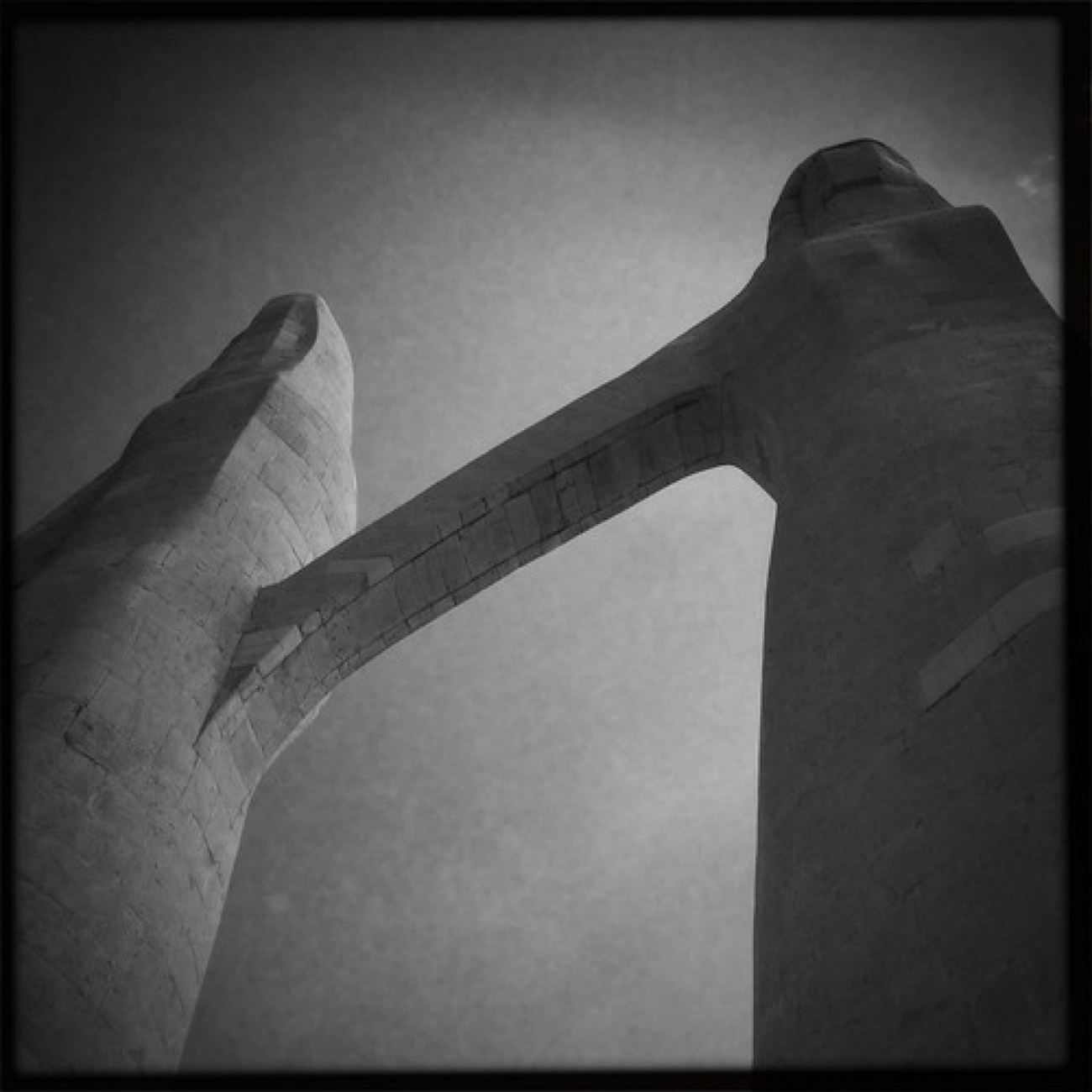
High on Mount Zalongo, overlooking the Acheron valley and the plain towards the Ionian coast, stands a monument raised in the mid-twentieth century: six tall, striding female figures carved in a single sweeping line, arms linked, built to be seen from a great distance below. It is a stark, modern piece of public sculpture rather than a historic relic, but its setting, on the ridge where the events are said to have taken place, gives it real weight.
From Parga, the monument is roughly a 45 to 50-minute drive inland and south, generally via Kanallaki and up into the hills near the village of Kamarina. It is best done by car or on a guided day trip, as public transport connections are limited. At the base, near the small monastery of Saint Dimitrios, a stone path climbs several hundred steps to the monument itself. It is a proper hike on uneven, sometimes slippery stone, so it is not suitable for pushchairs or anyone with limited mobility, though most reasonably fit visitors, including older children, manage it without difficulty and are rewarded with sweeping views.
Good to know
- Allow around half a day from Parga, including travel time, the climb and a pause to take in the view.
- The site is fully exposed to the sun, so early morning or late afternoon in summer is more comfortable than midday.
- Wear proper walking shoes; the steps are uneven stone and can be slick after rain.
- There is normally no admission fee for the outdoor monument itself.
- Combine the visit with the Acheron springs or the ruins of Souli's mountain stronghold for a fuller day of history.
Beyond Zalongo: the heart of Souli
For those keen to go further into this history, the ruined fortress of Kiafa, above the site of old Souli village, can still be reached on foot along mountain paths, though it demands sturdy footwear, a head for heights and a degree of fitness. It was here, among other strongholds, that the Souliotes fought their last battles before the region fell to Ali Pasha's forces in late 1803. It is a quieter, wilder counterpart to Zalongo: fewer visitors, tougher walking, but a direct sense of the terrain that let a handful of mountain clans defy one of the Ottoman Balkans' most powerful men for some fifteen years. Together, Souli and Zalongo make a moving excursion from the beaches of Parga.