
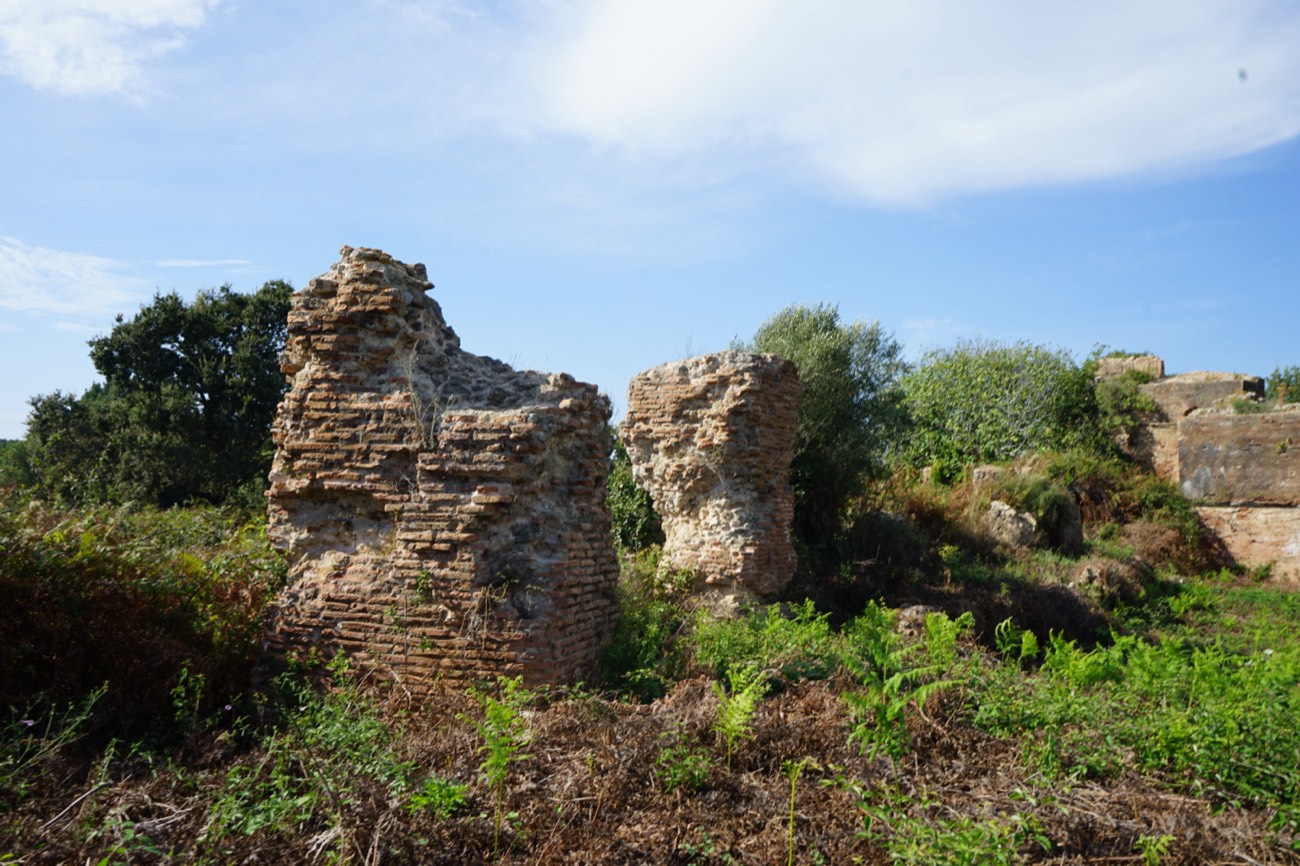
Some ruins whisper. Nikopolis declares. Spread across a windswept plain a short drive south of Parga, near modern Preveza, this is one of the largest Roman cities ever built in Greece — and it exists for one reason only: to broadcast, in stone, marble and running water, that Octavian had won. Wander its fallen walls today and you are walking through the opening act of the Roman Empire, staged on the very ground where the ancient world changed hands.
A city built to announce an empire
On 2 September 31 BC, the fleets of Octavian and Mark Antony met in the waters just outside the Ambracian Gulf, near the ancient town of Actium, at the narrow strait that Preveza now guards. Antony, backed by Cleopatra VII of Egypt, commanded the larger and more cumbersome force; Octavian's fleet, led by his admiral Marcus Agrippa, was smaller, faster and better handled. When Cleopatra's squadron broke from the battle line and made for open water, Antony followed her, and his abandoned fleet soon surrendered. Antony and Cleopatra fled to Egypt, where both took their own lives the following year.
The victory left Octavian the unrivalled master of the Roman world. Within a few years the Senate granted him the title Augustus, and a Roman Republic that had endured for almost five centuries gave way to the Empire. To mark the spot, Octavian founded a new city on the headland overlooking the battle site and named it Nikopolis — "City of Victory". He populated it by resettling communities from surrounding towns in Epirus, Acarnania and Aetolia, and revived and expanded an existing local festival into the Actian Games, held here every four years in honour of Apollo.
The monument on the hill
Just north of the city, on the ridge where Octavian is said to have pitched his camp before the battle, stood his Victory Monument — a long stone platform originally faced with the bronze rams cut from the prows of Antony's captured warships, backed by an inscribed portico. It was as much propaganda as commemoration: a permanent reminder, visible from the road, of exactly whose fleet had lost. Fragments of the podium and its dedicatory inscription survive on the hillside and can still be visited, offering sweeping views over the plain and the gulf beyond.
Walking the ruins today
Nikopolis grew into the capital of the Roman province of Epirus and thrived for centuries, so what survives is not one moment frozen but the layered remains of a long working city. The theatre, built into a natural hollow, could hold several thousand spectators and was substantially remodelled under Hadrian in the 2nd century AD. The odeon, a smaller roofed theatre used for music and oratory, is unusually well preserved and gives a good sense of how these buildings actually felt to sit in. Long stretches of the later Byzantine defensive walls, built when the city contracted in size during the early Christian period, still stand to an impressive height, along with the foundations of several large basilicas and a bishop's residence from that later era. Elsewhere, the line of a fifty-kilometre aqueduct that once carried water from springs near the Louros river is traceable across the countryside, and the small archaeological museum near the site brings together statuary, inscriptions and everyday finds that help make sense of the scattered stones outside. The site is extensive and largely open to the elements, so a visit rewards sturdy shoes, a hat and unhurried curiosity rather than a race through the highlights.
Getting there from Parga
Nikopolis lies close to Preveza, on the coast road that runs south from Parga around the Ambracian Gulf. By car the drive takes around fifty minutes to an hour, following the coastal route through villages such as Anthousa and Fanari before dropping down towards Preveza; the archaeological site sits just north of the town, clearly signposted from the main road. There is no rail link in this part of Epirus, and while regional buses connect Parga and Preveza, reaching the site itself is far easier with your own transport or a taxi, since the ruins are spread across open countryside a short distance outside town. Some day-trip excursions from Parga also combine a visit to Preveza and Nikopolis with a stop at the seafront, so it is worth asking locally what is currently on offer.
Preveza itself repays a wander, particularly the atmospheric old quarter near the Aktio strait, before or after exploring the ruins. Coming from Parga, many visitors treat Nikopolis as a half-day excursion, leaving time to see Preveza and the shoreline overlooking the battle site as well.
Good to know
- The main archaeological site and the Victory Monument are separate, short drives apart — allow time to see both if you can.
- Shade is limited across the site, so visit in the cooler morning hours in summer and bring water and sun protection.
- The small site museum is worth the extra time; it gives useful context before or after walking the ruins.
- Opening hours and admission arrangements can change seasonally, so it is worth checking ahead of your visit.
- Combine the trip with Preveza town, whose old streets and gulf-side views make a natural stop on the way back to Parga.